
Skin can look healthy one week, then tired and uneven the next, even when your skincare routine has not changed. In Singapore, year-round UV exposure, humid weather, pollution, and long hours in air-conditioned spaces can all affect skin radiance.
Finding a suitable dull skin treatment in Singapore starts with understanding why the skin looks dull. Dullness is not a medical diagnosis. It is a visible concern that may appear as rough texture, uneven tone, dryness, or a flat complexion that reflects less light.
Table of Contents
Why Does My Skin Look Dull and Tired?
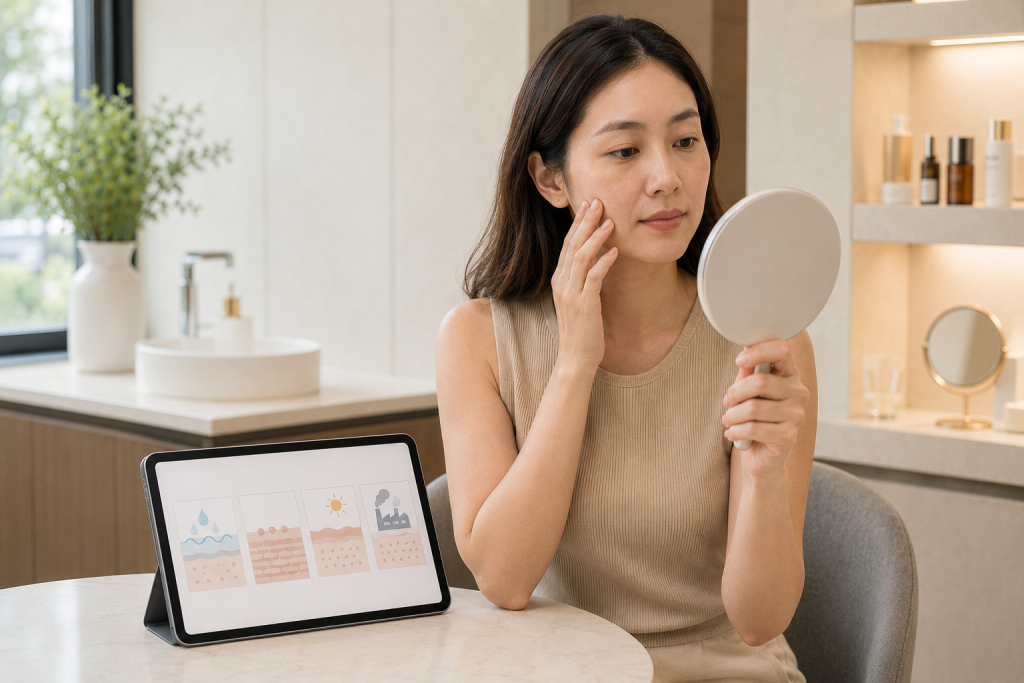
The four main causes of dull skin are:
- Dehydration and a weakened skin barrier
- Dead skin cell buildup
- Sun damage and pigmentation
- Lack of sleep and environmental stress
More than one cause may be present at the same time. For example, skin can be both dehydrated and unevenly pigmented, so treating only one concern may produce limited improvement.
1. Dehydration and a Weakened Skin Barrier
Dehydrated skin lacks water. It may feel tight, look less plump, or show fine lines that become more noticeable after cleansing.
Moving between Singapore’s humid outdoor weather and cool, air-conditioned spaces can increase moisture loss. Harsh cleansers, frequent exfoliation, and combining too many active ingredients may also disrupt the skin barrier. When this protective layer is weakened, the skin may become dry, sensitive, rough, or easily irritated.
Dry skin and dehydrated skin are not exactly the same. Dry skin naturally produces less oil, while dehydration refers to insufficient water in the skin. This means oily and combination skin can also become dehydrated and look dull.
2. Dead Skin Cell Buildup
The outer layer of the skin naturally sheds old cells. When this process becomes slower or uneven, dead skin cells may collect on the surface and create a rough texture.
An uneven surface does not reflect light as smoothly, which can make the complexion look flat or tired. Buildup may also contribute to flaky areas or congested pores.
Exfoliation may help, but more is not always better. Frequent scrubbing or using several exfoliating acids together can irritate the skin and weaken its protective barrier. The American Academy of Dermatology recommends choosing an exfoliation method suited to your skin type and being gentle to reduce irritation.
3. Sun Damage and Pigmentation
Singapore’s year-round UV exposure can contribute to dark spots, uneven pigmentation, and post-inflammatory marks left behind after acne or irritation. These changes in colour may make the complexion appear patchy or less radiant.
Daily UV exposure can build up even when the skin does not burn. Sun protection is therefore important for reducing further damage and preventing existing areas of pigmentation from becoming more noticeable.
Skin brightening and skin lightening should not be treated as the same goal. Brightening focuses on improving radiance and the appearance of uneven tone. It should not involve changing a person’s natural skin colour.
4. Lack of Sleep and Environmental Stress
Poor sleep may leave the face looking tired, particularly around the eyes. Stress can also affect daily habits, including sleep, diet, skincare consistency, and the tendency to touch or pick at the skin.
Pollution, smoking, inconsistent sun protection, and an unbalanced diet may contribute to a less healthy-looking complexion. However, lifestyle changes alone may not correct dullness caused by persistent pigmentation, irritation, or uneven texture.
Why Your Skin May Look Dull Despite Good Skincare
A long skincare routine does not always mean the skin is receiving what it needs. Products may not help if the underlying concern has been incorrectly identified.
For example, repeatedly exfoliating pigmentation will not necessarily remove it. Applying more brightening products to irritated skin may also cause redness, peeling, and increased sensitivity.
Skincare may reach a limit when dullness is related to persistent pigmentation, acne marks, deeper texture changes, or an ongoing skin condition. Products that cause regular stinging, redness, or peeling may be weakening the skin barrier rather than improving radiance.
How to Fix Dull Skin at Home
A simple and consistent routine may help improve dull skin caused by mild dehydration, surface buildup, or unsuitable skincare habits.
- Cleanse gently: Use a mild cleanser suited to your skin type. Avoid very hot water, harsh scrubs, and excessive washing.
- Support the skin barrier: Apply a moisturiser that helps reduce water loss. Oily skin may suit a lightweight lotion or gel, while dry skin may need a richer cream.
- Exfoliate carefully: Start slowly and avoid using multiple exfoliating acids or scrubs in the same routine. Stop if the skin becomes persistently red, sore, or flaky.
- Consider an antioxidant: Topical vitamin C and similar antioxidants may support a brighter, more even-looking complexion. Introduce new active ingredients gradually.
- Use sunscreen every day: Choose a broad-spectrum sunscreen and apply it properly, especially when spending time outdoors. Sun protection helps prevent further UV-related pigmentation and skin damage.
- Review daily habits: Aim for consistent sleep, balanced nutrition, sufficient fluid intake, and a regular skincare routine. These habits support general skin health, although they may not correct every cause of dullness.
Home care can help improve surface dryness, mild dehydration, and dead skin buildup. If dullness remains despite a gentle and consistent routine, the concern may involve pigmentation, texture changes, or another condition that requires a closer assessment.
What Is the Best Treatment for Dull Skin in Singapore?
There is no single best treatment for dull skin because dehydration, pigmentation, and uneven texture require different approaches. A doctor should first examine the skin and identify the main cause before recommending a procedure.
Treatments for Dehydrated or Tired-Looking Skin
When dullness is mainly linked to dehydration or reduced skin quality, treatment may focus on supporting hydration, elasticity, and overall texture.
NU.U offers several options that may be considered:
- ECM Injectable Skin Booster: ECM stands for extracellular matrix, the natural support network in the deeper layers of the skin. This injectable treatment uses processed human acellular dermal matrix, or hADM, which contains collagen, elastin, and glycosaminoglycans. Rather than adding facial volume, it may help support hydration, elasticity, texture, and the appearance of visible pores over time.
- NAHYCO HA: An injectable hyaluronic acid treatment designed to support skin hydration and firmness rather than add facial volume in the same way as a conventional dermal filler.
- Silk Skin PB Serum: A serum cocktail containing PDRN and other selected ingredients that may support hydration and overall skin quality.
- DEP: A needle-free transdermal delivery method that uses controlled electrical pulses to temporarily increase skin permeability, allowing selected ingredients to penetrate the skin.
- Exosomes: Usually applied after a suitable skin procedure to support the skin’s recovery process and overall condition.
These treatments are not interchangeable. Some involve injections, while others use topical or device-assisted delivery. The preferred option will depend on the concern being treated and the patient’s comfort with the procedure.
Treatments for Pigmentation and Uneven Skin Tone
Pigmentation-related dullness may appear as dark spots, post-acne marks, or patches of uneven colour.
NU.U offers several light and laser-based treatments for these concerns:
Each device delivers energy differently. The choice depends on the type, depth, and distribution of the pigmentation, as well as the patient’s skin tone and sensitivity.
Pigmentation should be assessed carefully because concerns that look similar may respond differently to treatment. Using an unsuitable device or setting may irritate the skin and make discolouration more noticeable.
Treatments for Rough or Uneven Skin Texture
When the skin looks dull because its surface is rough or uneven, treatment may focus on skin renewal and collagen remodelling.
Possible options at NU.U include:
- ECM Injectable Skin Booster: May also be considered for rough texture, visible pores, and reduced elasticity. Unlike resurfacing treatments, it supports the skin’s deeper structure and overall quality.
- Dual Wavelength Fractional Non-Ablative Laser: Delivers fractional laser energy while leaving surrounding skin untreated, allowing gradual improvement with less recovery than a fully ablative procedure.
- Micropulse Needle RF Treatment: Combines fine needles with radiofrequency energy to address uneven texture and support collagen remodelling.
- CO₂ Laser Treatment: A more intensive resurfacing option that may be considered for deeper texture concerns, depending on skin type and suitability.
These procedures differ considerably in intensity and recovery time. A stronger treatment is not automatically the right choice, particularly for sensitive or easily pigmented skin.
Where Brightening Facials May Fit
A brightening facial may help with surface cleansing, mild buildup, and temporary dehydration. It may be suitable when the skin needs gentle maintenance rather than treatment for a deeper concern.
However, facials may have limited effects on persistent pigmentation, acne scarring, or structural texture changes. A skin assessment can help determine whether a facial is appropriate or whether a medical aesthetic treatment may be considered.
What to Expect From a Dull Skin Treatment

The treatment experience will depend on the procedure selected. Laser, injectable, radiofrequency, and topical treatments have different preparation, recovery, and aftercare requirements.
Skin Assessment and Treatment Selection
Before treatment, the doctor may assess:
- Skin type and sensitivity
- Hydration and skin barrier condition
- Pigmentation pattern
- Surface texture
- Current skincare products
- Medical history and medication use
- Previous aesthetic procedures
- Tolerance for injections or downtime
This assessment also helps identify whether several concerns are contributing to the dull appearance.
Downtime and Possible Reactions
Temporary redness, warmth, swelling, sensitivity, dryness, or peeling may occur after certain laser and energy-based treatments. Injectable procedures may cause small bumps, tenderness, swelling, or bruising around the treatment sites.
The likelihood and duration of these reactions depend on the procedure, treatment settings, and individual skin response. Patients should follow the aftercare instructions provided for their specific treatment.
Results and Number of Sessions
Hydration-related changes may become noticeable sooner than improvements in pigmentation or uneven texture. Pigment clearance and collagen remodelling usually develop gradually as the skin responds to treatment.
Some people may need several sessions, while others may be advised to combine treatment with a suitable skincare routine. Results and treatment experiences vary between individuals.
Dull Skin Treatment Cost in Singapore
The cost of dull skin treatment in Singapore may depend on:
- The treatment or device selected
- The product used
- The size of the treatment area
- The number of recommended sessions
- The complexity of the skin concern
- Follow-up and aftercare requirements
A consultation is needed before an accurate treatment plan and cost can be provided.
Dull Skin Treatment at NU.U Clinic

NU.U Aesthetics & Wellness Clinic offers treatments for dehydration, pigmentation, and uneven skin texture at its Orchard Road clinic.
Dr K. K. Chew will assess the possible causes of dullness, medical history, current skincare, treatment goals, and preferred downtime before recommending an option. Depending on the findings, the plan may focus on one concern or address several contributing factors over time.
Book a consultation with NU.U Clinic to discuss which approach may be suitable for your skin. Results and treatment experiences vary between individuals.
Frequently Asked Questions
Can oily skin still look dull?
Yes. Oily skin can become dehydrated, develop dead skin cell buildup, or have uneven pigmentation. Excess oil does not necessarily mean the skin has enough water or an undamaged skin barrier.
Does drinking more water improve dull skin?
Adequate fluid intake supports general health, but drinking more water may not correct dullness caused by pigmentation, surface buildup, or skin barrier damage. Skincare and treatment should address the actual cause.
Can dull skin return after treatment?
Yes. UV exposure, dehydration, irritation, and inconsistent skincare may cause dullness to become noticeable again. Maintenance needs depend on the cause and treatment used.
Should I stop exfoliating if my skin looks dull and irritated?
Pause exfoliation if the skin is persistently red, sore, peeling, or stinging. Continuing to use exfoliating products on irritated skin may further weaken the skin barrier.
Can several causes of dull skin occur at the same time?
Yes. Dehydration, pigmentation, rough texture, and lifestyle factors can overlap. This is why a cause-based assessment is more useful than choosing a treatment based only on the skin’s appearance.


 +65 6732 9989
 +65 9152 3582